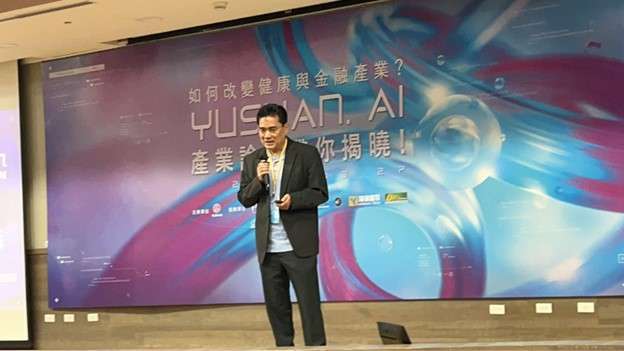
Built to turn world-class AI research into sovereign AI capability for Taiwan.
Yushan AI research and development is led by Dr. Jiangsen Jonathan Tien, former Vice President of Microsoft Research Asia, with long-term capital and cross-border industry backing from I-fa Chang of Inkstone Capital.
Our work goes beyond a chat interface. We combine large language models, edge AI, private enterprise deployment, Traditional Chinese context, data governance, and industry workflows into AI infrastructure that can be operated inside sensitive environments.
Dr. Jiangsen Jonathan Tien
Research Leadership
AI R&D led by Dr. Tien
Dr. Tien previously served as Vice President of Microsoft Research Asia. He joined Microsoft in 2004, led technology innovation work, and has focused on turning frontier software research into practical products. Public coverage traces his earlier career through AT&T Bell Labs, UNIX multi-core systems research, SpaceLabs Medical, and bSQUARE, giving him experience across research labs, medical instrumentation, embedded software, and startup productization.
Productization
From research to usable systems
At Yushan.AI, Dr. Tien serves as Chief AI Scientist and leads large language model development. His background spans natural language processing, machine learning, speech recognition, deep learning, product incubation, and AI engineering, applying model capability to enterprise knowledge work, healthcare, financial media, edge computing, and privacy-sensitive deployments.
Capital Foundation
Backed by Inkstone Capital
Yushan AI was established with investment from I-fa Chang of Inkstone Capital. Founded in 2012, Inkstone Capital focuses on high technology, AI, healthcare technology, FinTech, insurance, and long-term real asset opportunities, with cross-border experience across Taiwan, Asia, and U.S. capital markets.
Sovereign AI
Localized for Taiwan
With research leadership and capital support aligned, Yushan AI focuses on Traditional Chinese context, local industry data, enterprise-grade governance, private deployment, and edge inference so organizations can use AI inside their own data boundaries.